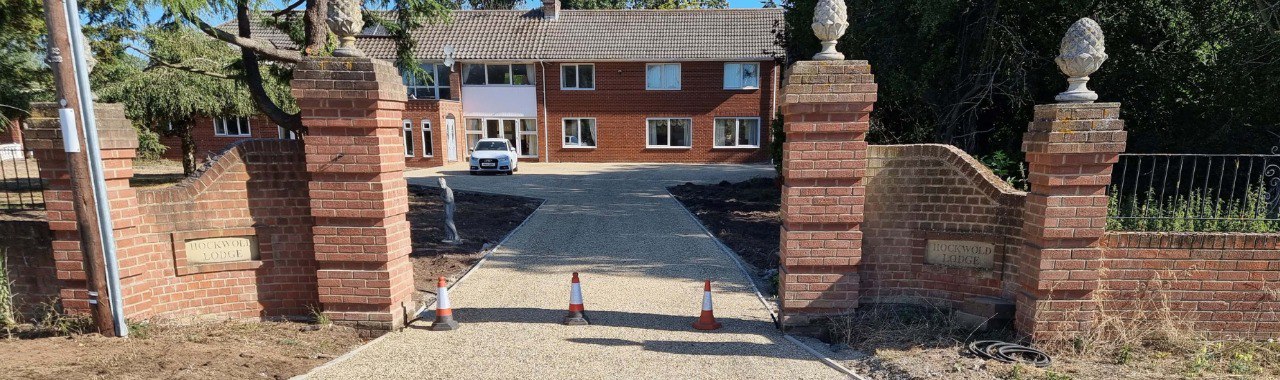
How Professional Resurfacing Restores a Worn but Structurally Sound Driveway
A driveway can begin to look tired long before its underlying construction has reached the end of its useful life. Years of vehicle movements and exposure to changing weather can leave the surface faded, worn or inconsistent, even though the supporting structure beneath remains stable.
For property owners in Isleham, Cambridgeshire, professional driveway resurfacing can provide an effective way to renew a worn surface without unnecessarily reconstructing areas that remain structurally sound. The key is determining whether deterioration is confined mainly to the upper surface and preparing the existing driveway correctly before a new finish is installed.
How Does Professional Driveway Resurfacing Work?
Resurfacing generally involves preparing an existing stable driveway and installing a renewed surface over it. Rather than removing the complete construction, suitable existing layers can continue to provide support beneath the new finish.
However, resurfacing should never simply be viewed as covering an old driveway.
The condition of the existing surface, base, edges, levels and drainage all need to be considered first. Any defects capable of affecting the new surface should be addressed during preparation so that the resurfacing work begins with a dependable foundation.
What Makes a Driveway Suitable for Resurfacing?
The most important factor is structural stability.
A driveway that looks worn but remains firm and properly supported can be very different from one suffering from significant movement beneath the surface.
Signs that resurfacing may be worth considering can include:
- General surface wear
- Fading and weathering
- Loss of a consistent finish
- Minor localised deterioration
- Previous repairs creating a patchy appearance
- Limited defects that can be corrected beforehand
- A generally stable driveway without widespread settlement
A professional assessment is important because some underlying problems can initially appear to be relatively minor surface defects.
Surface Wear Does Not Always Mean Structural Failure
Driveways naturally change in appearance as they age.
Regular traffic gradually affects frequently used sections, while rainfall, sunlight and seasonal temperature changes influence the exposed surface. Over time, the driveway may lose the uniform appearance it originally had.
This does not automatically mean that the construction underneath has failed.
When the supporting layers remain stable, resurfacing can renew the visible and functional wearing surface while making use of the sound construction already in place.
Why the Existing Base Must Be Assessed
A renewed driveway surface will still depend on what sits beneath it.
If the supporting construction is unstable, adding a new surface does not remove the underlying movement. Settlement or structural weakness can eventually influence the resurfaced area as well.
Professional assessment therefore looks for indications that the base remains capable of providing suitable support.
Where isolated weaknesses are identified, they may be addressed as part of the preparation. Where movement is widespread, resurfacing alone may not be the appropriate solution.
Existing Cracks Should Be Investigated First
Cracks can reveal important information about the condition of a driveway.
A small number of limited defects does not necessarily prevent resurfacing, but their cause needs to be understood. There is a significant difference between superficial deterioration and cracking caused by movement within the supporting construction.
Simply covering an active crack may conceal it temporarily without stopping the movement responsible for it.
Professional preparation involves determining why cracking has occurred and addressing relevant defects before the new surface is installed.
Sunken Sections Need More Than a New Surface
A depression or sunken area indicates that the driveway’s original level has changed.
Adding new material over the top without establishing why the area has settled can leave the underlying weakness unresolved. The finished driveway may initially appear level, but continued movement underneath can cause the problem to return.
Where settlement is genuinely localised, the affected area may be capable of being repaired before the wider driveway is resurfaced.
If substantial sections have moved, more extensive remedial work may be required.
Preparation Is the Foundation of Good Resurfacing
Much of the work that determines the quality of a resurfaced driveway happens before the final surface is laid.
The existing area needs to provide suitable conditions for the new material. Loose, unstable or deteriorated sections should not simply be hidden beneath the resurfacing layer.
Preparation may involve dealing with local defects, establishing suitable levels and ensuring that edges and transitions are appropriately formed.
This stage allows the resurfaced driveway to function as an integrated construction rather than simply placing a new finish over an ageing surface.
Drainage and Surface Levels Should Be Checked
Resurfacing provides an opportunity to consider how effectively the existing driveway manages rainfall.
Over time, minor settlement or deterioration can alter surface levels and create low areas where water begins collecting. If these problems are ignored, installing a new surface may reproduce the same drainage weakness.
The existing falls and low points should therefore be assessed before resurfacing.
Correctly planned finished levels help rainwater move appropriately across the driveway rather than repeatedly collecting in vulnerable areas.
Driveway Edges Are Important to the Finished Result
Edges are sometimes overlooked when attention is focused on the main surface, but they form an important part of the overall driveway construction.
Poorly supported or deteriorated edges can begin breaking down under repeated vehicle loading. If these weaknesses remain when the central area is resurfaced, the driveway can still appear unfinished and remain vulnerable around its perimeter.
Professional resurfacing should therefore consider whether the existing boundaries provide suitable support.
Where necessary, edge defects can be addressed as part of the wider preparation.
Existing Repairs Need to Be Checked
A driveway that has been in use for many years may contain several previous repairs.
These repairs can remain perfectly serviceable but leave the surface looking inconsistent because different sections have weathered at different rates. Resurfacing can help create a much more uniform finish across the driveway.
Before this happens, however, previous repair areas should be assessed for stability.
Sound repairs can often remain part of the supporting construction, while any section showing renewed movement or deterioration should be addressed before it is covered.
Resurfacing Can Restore a Consistent Appearance
One of the most immediately noticeable benefits of resurfacing is visual improvement.
A driveway containing faded areas, surface wear and older repairs can begin to look fragmented even when it remains structurally dependable. Installing a properly prepared new surface can restore a cleaner and more consistent finish.
This can improve the overall appearance of the entrance to the property without changing a driveway layout that already works well.
The benefit should not be viewed as purely cosmetic, however. The new surface also provides a renewed wearing layer for everyday use.
Existing Driveway Layouts Can Often Be Retained
A structurally sound driveway may already have an appropriate shape, width and access arrangement.
In these circumstances, there may be no reason to redesign it simply because the surface has become tired.
Professional resurfacing can concentrate on restoring the condition of the driveway while retaining an established layout that continues to meet the needs of the property.
This makes resurfacing particularly useful where the underlying construction and overall design remain suitable but the visible surface has deteriorated.
Transitions Need Careful Planning
Installing another surface layer can affect the finished height of a driveway.
This means areas where the driveway meets entrances, pathways and other existing features need to be considered carefully.
Poorly planned transitions can create awkward changes in level or untidy joins.
Professional resurfacing takes these interfaces into account during preparation so that the renewed driveway connects appropriately with the surrounding property.
When Is Resurfacing Not the Right Approach?
Resurfacing is intended for driveways where sufficient stable construction remains beneath the worn surface. It cannot compensate for extensive structural deterioration.
A different approach may need to be considered where there is:
- Widespread settlement
- Significant movement across several areas
- Extensive structural cracking
- Repeated failure of previous repairs
- Substantial deterioration of the supporting construction
- Large areas where levels have become unstable
In these circumstances, concentrating solely on the surface may leave the actual cause of deterioration unresolved.
The condition beneath the driveway should always determine the appropriate scope of work.
Driveway Age Alone Should Not Decide the Approach
An older driveway is not automatically unsuitable for resurfacing.
Some established surfaces remain structurally dependable despite years of visible weathering. Conversely, a relatively recent driveway can develop significant defects if its supporting construction has moved.
Current condition is therefore more important than age alone.
A professional assessment can determine whether enough sound construction remains to make resurfacing a suitable option.
Why Professional Resurfacing Provides a Better Approach
The value of professional resurfacing lies in understanding that the finished surface is only one part of the project.
Correct preparation, assessment of the existing base, attention to localised defects, suitable levels and properly formed edges all influence the quality of the completed driveway.
At Isleham Driveways, we assess the existing surface and supporting condition before determining whether resurfacing is appropriate. This allows serviceable construction to be retained where suitable while ensuring that underlying weaknesses are not simply covered over.
For property owners in Isleham, Cambridgeshire, this provides a practical approach to renewing a worn driveway based on its actual condition.
Conclusion
Professional resurfacing can restore a worn but structurally sound driveway by creating a renewed wearing surface while retaining suitable existing construction underneath. It can improve an inconsistent, faded or weathered appearance without unnecessarily rebuilding a driveway that continues to have a stable foundation.
Successful resurfacing depends on preparation. Cracks, local settlement, drainage, edges, existing repairs and the supporting base should all be assessed before the new surface is installed.
If your driveway in Isleham, Cambridgeshire is looking worn but remains generally stable, contact Isleham Driveways. We can assess its condition and determine whether professional resurfacing is an appropriate way to restore its appearance and performance.
Call us on: 01638 597 108
Click here to find out more about Isleham Driveways
Click here to complete our contact form and see how we can help with your driveway needs.